What Does Aerating a Lawn Do?
A lawn needs many things to keep it at its healthiest. Your lawn needs proper sun, moisture, nutrients, and room to breathe, thrive and grow. Your lawn is always exposed to fresh air and sun, so how can you let it breathe? Through lawn aeration.
Let’s learn more about this common landscaping practice including what it is, how it helps your lawn, and some specifics about aerating in Colorado. There are so many things you can do for a healthier lawn, but aeration is among the most important.
What is Lawn Aeration?
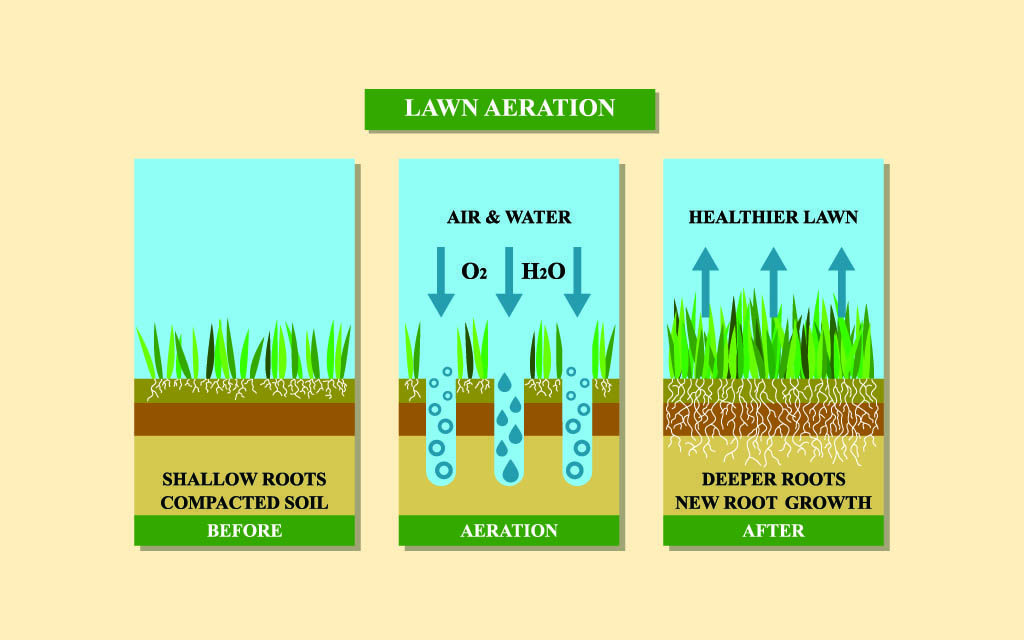
Lawn aeration is the landscaping practice of creating small holes in a lawn and its underlying soil. Poking holes in a lawn helps promote better distribution of water, nutrients, and can improve root growth, drainage, and beneficial microorganisms in the soil. Lawn aeration is recommended to all homeowners who want the best grass in Colorado.
When Should You Aerate Your Lawn?
You understand that aerating your lawn is good for your grass, but how often should you aerate your lawn? According to lawn equipment expert Toro, an annual aeration is recommended. Annual aeration is a must for homeowners with compact or clay soil, like Denver and the surrounding areas. Homeowners with healthy topsoil or sandier soil can get away with once every other year.
When to Aerate Lawns in Colorado
The best time to aerate a lawn is just before periods of heavy growth. In Colorado that means aeration is best performed in early or mid-spring before the seasonal showers refresh your lawn. You want to avoid aerating a soaked or wet lawn, so early and mid-spring before storms become more frequent is ideal. Think late February, March, and into April for aerating in Colorado.
A local landscape professional will always know the best time to aerate your unique lawn, so if you’re ever curious – just call and ask.
Do Spike Lawn Aerators Work?
If you have a small lawn, you might consider aerating the lawn yourself with a manual spike lawn aerator. Compared to landscape professionals and their gas-powered core lawn aerators, spike aeration is very time consuming and tedious. Spike lawn aerators are hand-driven rollers or spiked shoes, but they do as good of a job as professional core aeration?
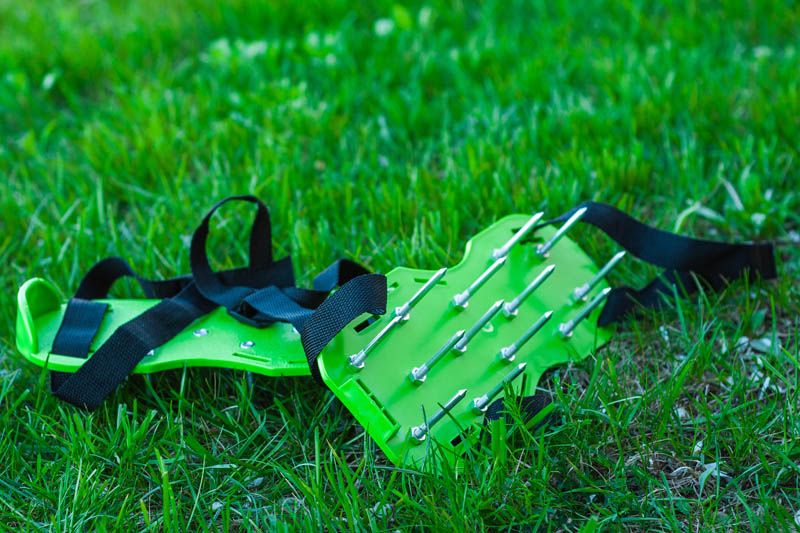
It depends. Hand-driven spike aerators drive a small hole into the turf, but professional core aerators remove a large core of earth for better moisture and nutrient distribution. Core aerating is also necessary to break up compact soil or prepare an area for overseeding.
In cases where you need simple aeration on a small patch of turf, spike lawn aerators are fine. If you have a large property, need effective nutrient and moisture distribution, or plan to overseed, core aeration from a professional is the best way to go.
How deep is lawn aeration?
The depth of lawn aeration will depend on the equipment used. Some aerators can go as deep as six inches, while spike aerators are typically between 1-2 inches.Your unique soil type will determine what depth and style of aerator is best suited for your lawn.
Following Up Lawn Aeration
- Water the lawn – Aim to water your freshly aerated lawn once to twice a day for a few days following aeration.
- Overseed – If you’re aerating for overseeding, it’s recommended to overseed shortly after aeration.
- Cores – Do you need to pick and dispose the cores left after aeration? That’s your call. The cores are unsightly, but they won’t harm your lawn.
Using a Professional for Lawn Aeration
If you are ready to overseed, need your lawn to get more water and nutrients, or don’t have the time to hand aerate a large property, you need a professional landscape company. Call your local landscaper to learn more about rates and pamper your lawn by getting it aerated.