
Table of Contents
Plants That Prevent Weeds
Key Takeaways
- Ground cover plants prevent weeds in the garden.
- They provide texture and color to the landscape.
- They reduce weed growth by blocking sunlight.
- They are low-maintenance and help keep soil moist.
They suppress weeds by forming dense mats that block weed seed germination.
Why Use Ground Cover Plants?
Sedum

- Easy maintenance- Sedum needs minimal pruning and fertilizing, so it’s easy to maintain even for novice gardeners.
- Versatility- Different varieties of Sedum are available in different colors, shapes, and sizes, making it versatile enough to fit into almost any landscape design.
- Weed suppressing capabilities- The thick mat of foliage created by sedums helps prevent light from reaching the soil surface which prevents weed germination.
- Attractive appearance- Many varieties have attractive flowers that will add color and texture to your landscape design.
Lamium

Vinca Minor

Juniper

Juniper is an attractive and hardy choice for ground cover, boasting evergreen foliage and small blue-purple berries. The plants come in many varieties, ranging from low-growing creeping shrubs to tall trees. Junipers are extremely tolerant of drought and heat, making them a great option for dry climates or yards with poor soil. Juniper is an excellent choice for covering large areas of the yard, providing year-round weed suppression and visual interest. They also repel weeds by creating a dense canopy that prevents new growth from emerging. Here are some advantages of growing juniper as ground cover:
- Low maintenance – Juniper requires very little pruning or fertilizing once established
- Attractive – Varied foliage colors provide year-round interest with hues ranging from deep greens to silvery blues
- Drought resistance – Junipers can thrive in areas with limited water availability
- Versatile – Suitable for planting on slopes or hills where other plants may struggle
- Deer resistant – Many juniper species are unpalatable to deer, making them ideal for gardens in rural areas.
Overall, juniper is an excellent choice for creating an attractive yet low-maintenance landscape, especially in Colorado. With its wide range of sizes and colors, versatility in planting locations, and pest resistance, it’s no wonder that it’s such a popular ground cover plant!
Creeping Thyme

Sweet Woodruff

- It spreads quickly to form a dense mat that can outcompete any unwelcome invaders.
- Its deep roots help it survive even in drought conditions, keeping away weeds.
- Sweet Woodruff’s ability to quickly fill open spaces makes it perfect for large areas or slopes where weeds might otherwise take over.
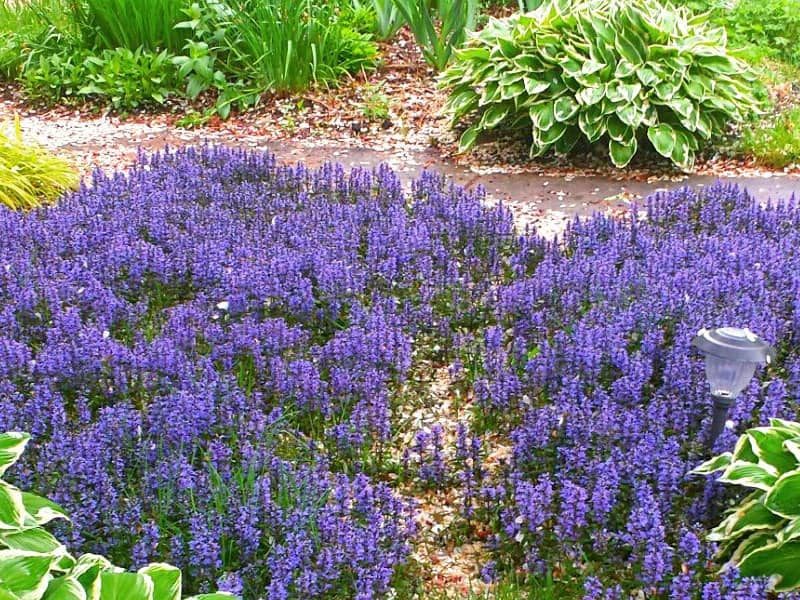
Ajuga Reptans
FAQ
The best way to control existing weeds before planting is to use a combination of manual removal and chemical control. Manual methods include pulling, hoeing, or cultivating the weeds. Chemical control involves using an herbicide to kill the weeds. Be sure to read and follow all directions on the label of any product you purchase for weed control—it’s important to apply products correctly in order to be effective and safe.
No, ground-cover plants are not suitable for all climates. Depending on the type of plant, it may be more or less suited to a given climate. Generally, evergreens do better in cold climates while annuals thrive in warm regions with mild winters. It is important to research the specific needs of the individual plants and select those best suited for your local climate conditions.
Maintaining ground cover plants is relatively simple, but it depends on the type of plants you’re dealing with. Generally speaking, most ground covers require moderate watering and occasional pruning or trimming to keep them looking their best. You’ll also need to replenish your soil with fertilizer every few months to keep your plants healthy and vibrant. Additionally, weeds will need to be pulled regularly if you want a weed-free garden.
Ground cover plants spread differently depending on the type of plant. Some may spread quickly, while others take longer to fill in an area. Generally speaking, fast-spreading ground covers can cover an area within a few months or even weeks. Slower-growing varieties will need more time to achieve full coverage, and you may have to replant every year or two until they reach the desired size.
Most ground cover plants are safe for pets, although there may be a few exceptions. If you’re concerned about your pet ingesting a particular plant, you can always look up the type of plant and research any potential dangers it may pose to your pet. Additionally, you should always supervise your pet in an area with ground cover plants to ensure that they do not eat or play with them.
Conclusion: Ground Cover Plants That Prevent Weeds
Ground cover plants are an excellent way to prevent weeds from taking over your garden. Not only do they look great, but they also help keep weeds in check while enriching the soil and providing a home for beneficial insects. With a variety of options available, you can find the perfect ground cover for any size space. Sedum, Lamium, Vinca Minor, Juniper, Creeping Thyme, Sweet Woodruff, and Ajuga Reptans are all great choices that will help keep your garden looking its best without having to worry about pesky weeds ruining it. So why not give one of these beautiful options a try? You won’t regret it!
If you’re looking for a reliable custom landscape company in Colorado for planting ground cover, look no further than JS Enterprises! Our experienced team of landscape professionals has been serving the area for over 20 years. Call us today to schedule a consultation and see how we can make your outdoor space look its best with ground cover!


