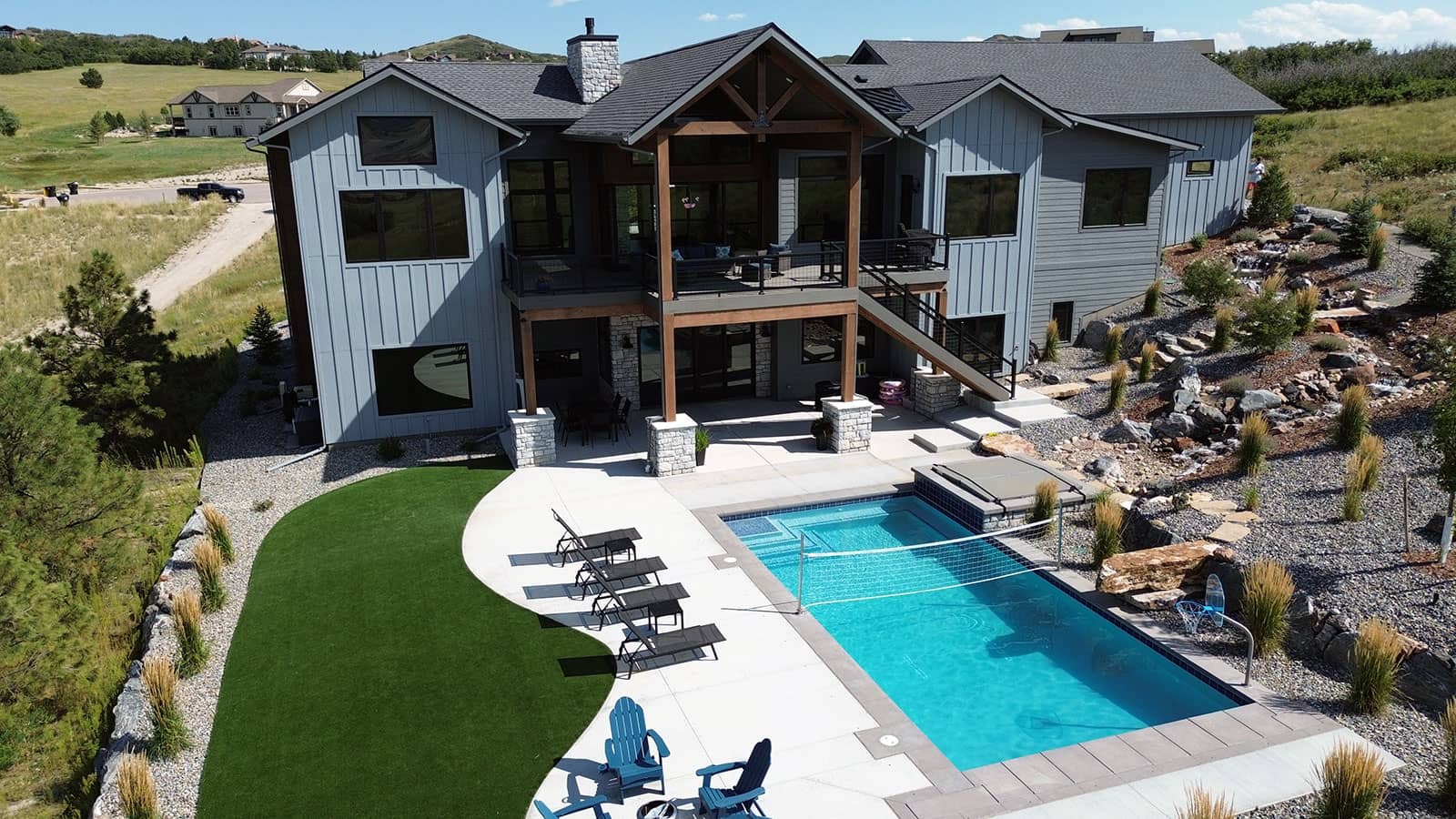
While some lawns are flat and boring, most have natural ebbs and flows that better connect a home with its natural surroundings. Look at landscaping around your neighborhood, and you’ll probably see many bumps, rounded cliffs, and other raised areas of landscaping, but what are those called?
If you’re dealing with shouldered soil or small, rounded ridges of earth, you’re dealing with landscape berms. Landscape berms are raised mounds of soil that can be designed in various shapes and sizes depending on the intended function and specific yard. Landscape berms are practical, but they can also be used to spruce up a yard’s layout.
In addition to their functional uses, landscape berms add visual interest to a yard by creating elevation changes and enhancing the overall aesthetic. Because berms are a mystery to the everyday homeowner, let’s learn more about them, including what berms are, what they do, and some ideas for creating your own landscape berms. The world needs a little variety and flow, and landscape berms are among the fastest and easiest ways to achieve it.
What is a Landscape Berm?
A landscape berm is a catch-all term for a rounded mound of soil constructed to visually improve a landscape’s layout, assist water runoff to the correct drainage spots, or create a privacy barrier. Landscape berms can enhance curb appeal by creating attractive focal points in the yard. In addition to their functional uses, berms can mask unsightly features such as utility boxes or air conditioning units. They also add height and texture to the landscape, enhancing its overall aesthetic.
Landscape Berm vs Raised Bed
A mound of dirt, isn’t that just a raised bed? While you could consider a big mound of dirt a raised bed, there are some distinctions in design and function between berms and raised beds. A landscape berm is normally rounded and contains no retaining wall,s while raised beds are normally rectangular and are walled. Raised beds often use a retaining wall for structural support, whereas berms are usually constructed without retaining walls unless additional support is needed for taller or steeper berms. Both can be used for plants and landscaping.
Berm Landscaping Ideas
- Privacy Berm – You can construct a 2-foot wall to set aside garden areas or limit exposure to a neighbor, creating privacy within your landscape. You can plant the berm with additional barrier plants, such as trees or shrubs. Strategically placed berms can enhance privacy by creating living screens from neighbors or roads.
- Native Bed Berm – Highlight the native plants in your yard by installing them on a berm.
- Flowering Berm – Plant a small berm with loads of differently colored flowers for a focal point in your garden.
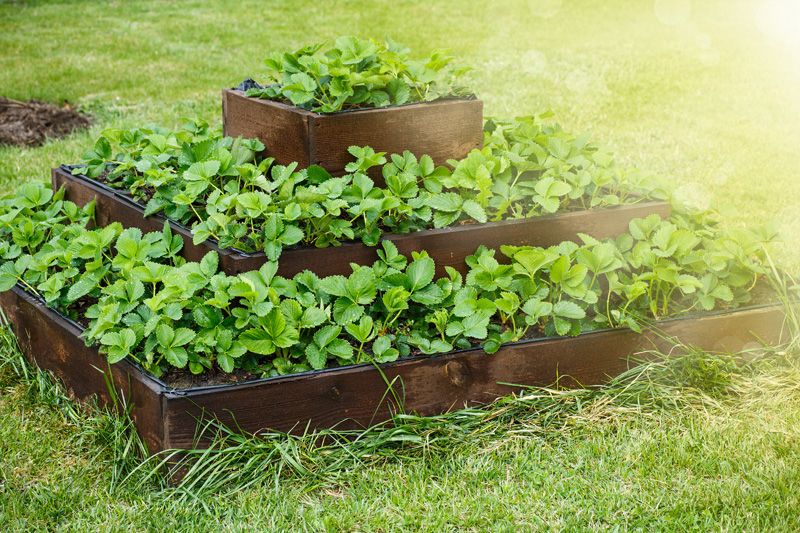
- Vegetable Berm – Berms make excellent mini-planters. Plant veggies in a berm for ease of access and excellent drainage.
- Backyard Berm – Adding a berm to your backyard can transform a flat or uninteresting area, adding visual interest and increasing the space’s functionality.
- Front Yard Berm – Placing a berm in the front yard can enhance curb appeal, frame the view from the street, and add dimension to your landscape design.
How to Create a Landscape Berm
Homeowners with some time, dirt, and other landscape resources can construct their own berms. Building a berm is a labor-intensive project, so we highly recommend calling in the professionals. However, if you’re feeling spry, here are some tips on how to create a landscape berm. Before you start building, it is advisable to mark the berm location with stakes and string. It’s also important to check with your town about whether a permit is needed for a Berm. Most professional landscape companies can pull permits on your behalf and save you some trouble.
Use online resources or a local landscape designer to design your berm and achieve your desired shape. When planning your berm shape, keep in mind that a berm should generally be about four to six times longer than it is wide, and an asymmetrical shape is usually more visually appealing than a circular one. You can choose kidney, oval, or other designs—incorporating multiple peaks in the shape can create a more natural and interesting appearance. Most berms are only one to two feet high.
Take time choosing your berm’s site. Choose a site that offers plenty of space for the entire berm and ensures it integrates well with the overall landscape design, or accomplishes the job you set out for. Double-check the site for any utilities, such as sprinkler heads. Mark your planned build area with a garden hose or outdoor paint.
Prepare your base by starting sod removal/cleanup at the border and work inward. Remove all grass, weeds, topsoil, and other debris to suppress weed growth and ensure a clean foundation for your landscape berm.
Ideally, you’ll build the foundation with fill dirt, rocks, boulders, gravel, or river rock for improved drainage and stability, though this isn’t necessary for small berms or yards with good drainage. It is recommended to use fill dirt or inorganic fill for the base of the berm and topsoil for the top layer. Using fill dirt or inorganic fill for the base can reduce costs and improve the overall stability of your landscape berm.
With the base down, you can begin building your mound by adding additional soil in layers to achieve the desired height and shape. Use high-quality fill soil from your local garden supplier to evenly fill the mound, and tamp the dirt as you fill to create a compact mass. For the top layer, use nutrient-rich soil and mix in compost to support plant growth and improve soil quality. When backfilling, consider the depth of soil and plant roots to ensure stability and healthy development. Select plants based on their mature size to avoid overcrowding in the berm. A berm should generally be no taller than 18 to 24 inches to prevent erosion.
Ideally, your berm will slope at a 5:1 ratio, which means creating a gradual slope rather than a steep slope. A gradual slope is preferable to a steep slope because it helps prevent erosion and creates a more natural appearance in your landscape. For every 1 foot of dirt height, you will need 5 feet of base support. You also want to slope your berm for the best possible drainage. If one area of your berm slopes into the yard while the other slopes into a drainage area, sculpt the berm with more slope on the drainage side.
Use simple landscape edging to define the berm and control erosion. Backfill the edging with more dirt to hold it in place.
Wait until a good rain to check your berm. Check for any erosion or drainage issues and fix them as necessary.
If your berm holds solid, you’re ready to plant. For a balanced look, place taller plants at the back of the berm and shorter plants at the top and sides. Be careful not to choose any plants that will overgrow the berm or root through the bottom.
Some plants thrive in full sun or hot sun, while others prefer shade, so select your plants based on the light conditions of your berm. Choosing plants that bloom in spring or summer will add seasonal interest and color to your landscape. Using mulch or a soil cooler can help regulate soil temperature and support plant health, especially during hot weather. Berms can also support biodiversity by providing habitats for pollinators and birds, particularly when you plant native species.
Hiring a Custom Landscaper for your Berm
A berm is only a rounded mound of dirt, but there might be more to berms than you think. Berms need to be built on the right spot, constructed with the appropriate material, sloped the right way, and then appropriately planted. Professional landscapers can incorporate berms into the overall landscape design to maximize both aesthetic appeal and functional benefits. While some homeowners can do this on their own, many choose a custom landscaping company. You can do the work yourself or have a professional do it right the first time. When planning your berm, consider drawing inspiration from other gardens or landscape designs to generate creative ideas for your own project.
Installing Landscape Berms
Berms add visual interest, improve drainage in your yard, create privacy, and add much more aesthetic appeal to your property. Well-designed berms can increase property value by as much as 15% and reduce long-term maintenance costs. They are especially useful for adding interest to a flat property or for filling an empty spot in the yard that lacks appeal. Berms also enhance the overall aesthetic by adding height and texture. When planning your berm, estimate the amount of soil or mulch needed in cubic yards to ensure you have enough material for the desired size and shape. Consider installing a berm yourself or have JS Enterprises install one for an excellent berm that matches your property and needs.
FREE Estimates & Transparent Pricing
We offer free, no‑obligation estimates that give homeowners and businesses a clear, realistic starting point so they can plan with confidence. Our transparent pricing shows costs up front, while custom landscaping concept plans translate your vision into scaled layouts, material selections, and phased budgets to streamline permitting, installation, and HOA approvals.